Download and install the SysInfo IMAP Email Backup Tool on your system. After the installation is complete, launch the software to begin the IMAP email backup process.

On the home screen, choose IMAP as the source email platform to begin the backup or migration process.

Configure the IMAP account using either the Single Account option for an individual mailbox or the Batch/CSV option to process multiple IMAP accounts simultaneously.

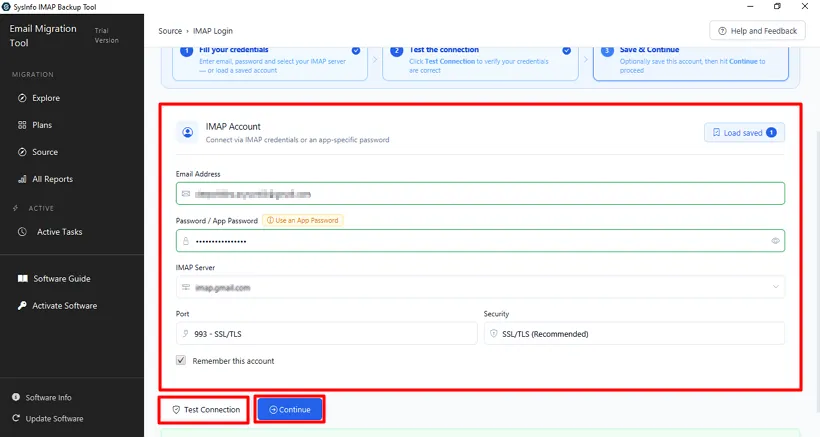
Select the Single Account option, enter the required IMAP login credentials, verify the connection using the Test Connection feature, and click Continue to proceed.

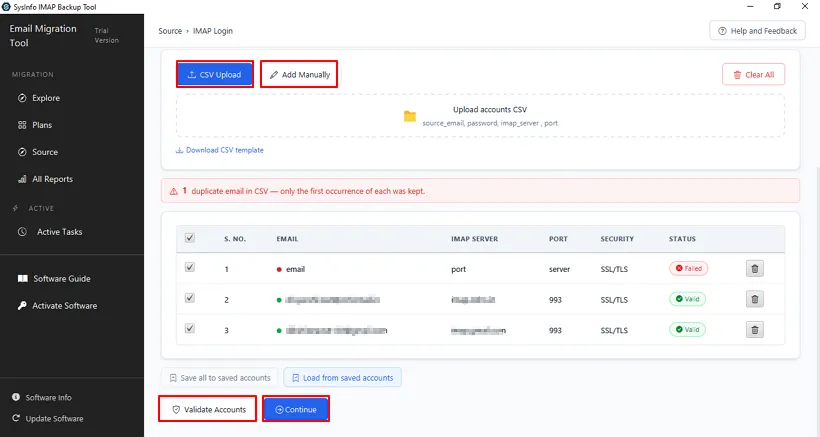
Choose the Batch CSV option and add multiple IMAP accounts by uploading a CSV file or entering the account details manually. Validate all accounts to ensure successful authentication, then click Continue to proceed with the backup or migration process.

After authentication, the software displays the mailbox in a tree structure. Select the required email folders or choose all folders, then click Continue to Filter to apply backup or migration filters.

Under the File Format section, select PST as the destination format. Alternatively, you can choose from other supported formats, including PDF, JSON, MBOX, DOC, DOCX, EML, MSG, and CSV, based on your backup requirements.

Configure the backup settings according to your requirements:

Review all the selected settings and configurations carefully, then click Next to initiate the IMAP to PST export process.

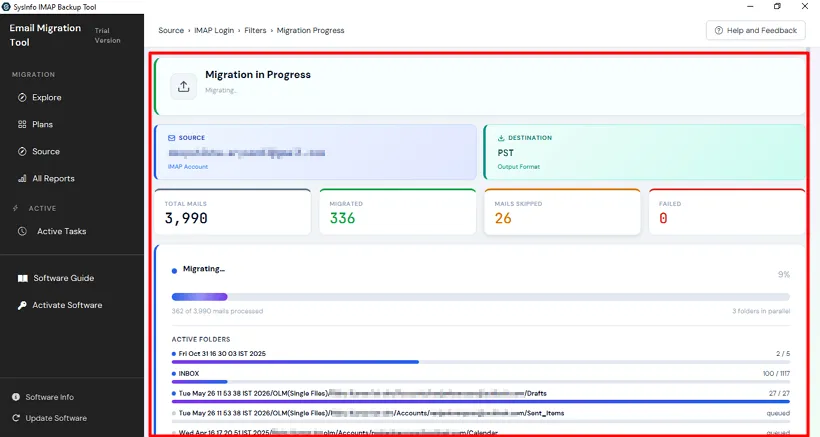
Monitor the progress of the IMAP to PST export process in real time. Once the operation is complete, review the status report to verify that all mailbox data has been exported successfully.
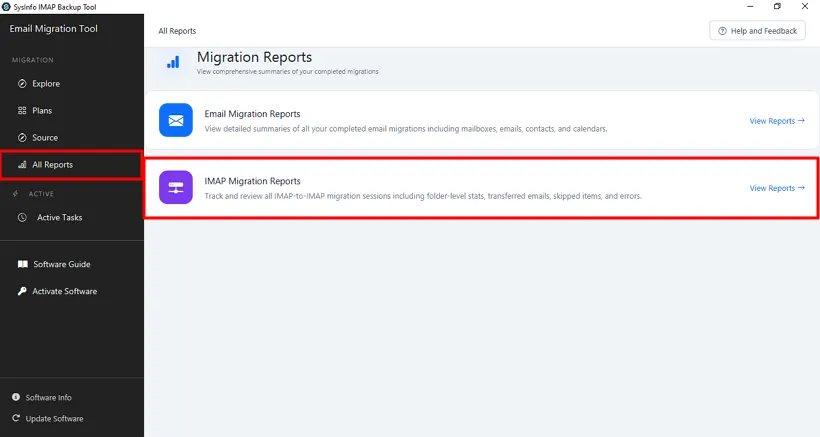
After the export process is completed, navigate to the All Reports section in the left panel and open the IMAP Migration Report to review the detailed export summary and status of the completed task.
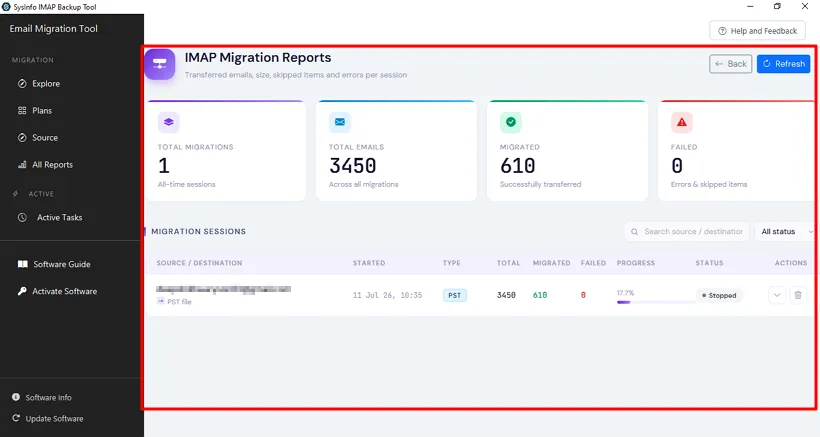
Review the detailed IMAP Migration Report, which provides information such as the export status, processed items, skipped items, failed items (if any), and other relevant details for verification and auditing purposes.
Download and install the SysInfo IMAP Email Backup Tool on your system. After the installation is complete, launch the software to begin the IMAP email backup process.
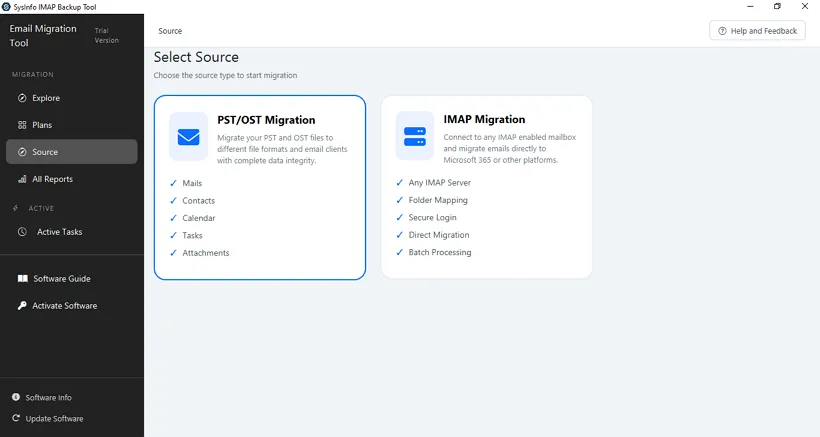
On the home screen, choose IMAP as the source email platform to begin the backup or migration process.
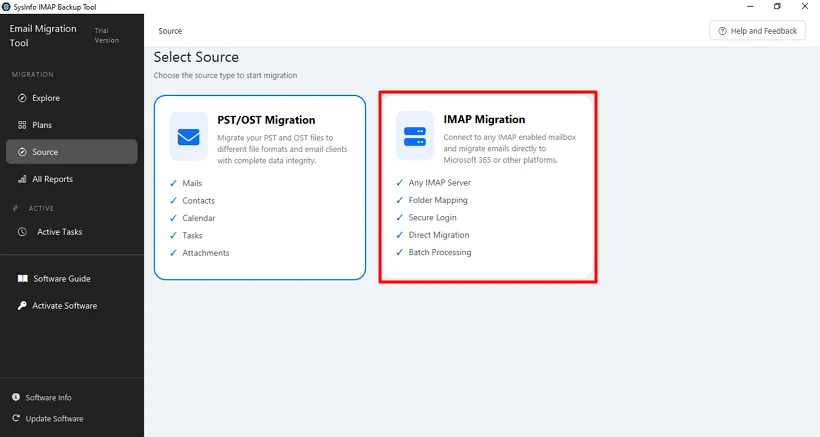
Configure the IMAP account using either the Single Account option for an individual mailbox or the Batch/CSV option to process multiple IMAP accounts simultaneously.
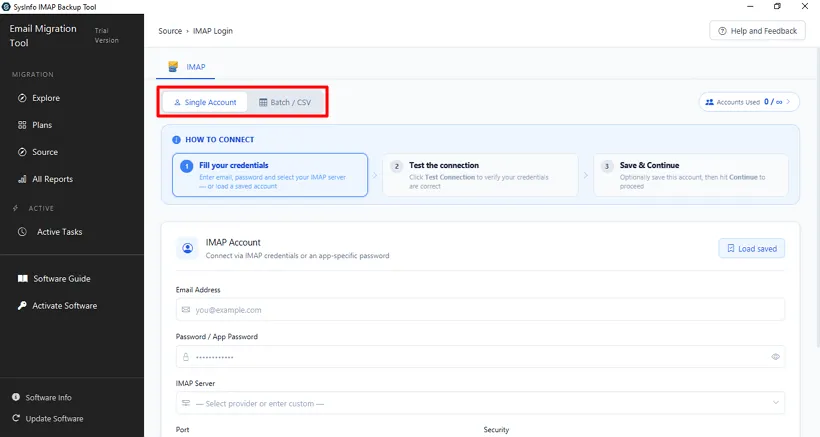
Select the Single Account option, enter the required IMAP login credentials, verify the connection using the Test Connection feature, and click Continue to proceed.
Choose the Batch CSV option and add multiple IMAP accounts by uploading a CSV file or entering the account details manually. Validate all accounts to ensure successful authentication, then click Continue to proceed with the backup or migration process.
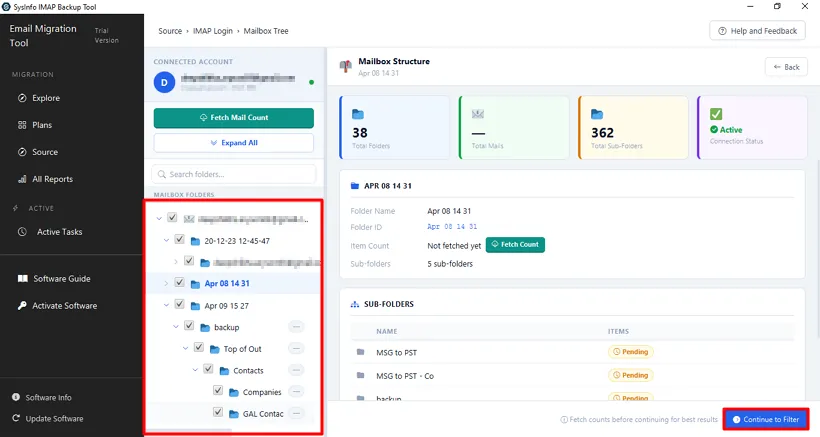
After authentication, the software displays the mailbox in a tree structure. Select the required email folders or choose all folders, then click Continue to Filter to apply backup or migration filters.
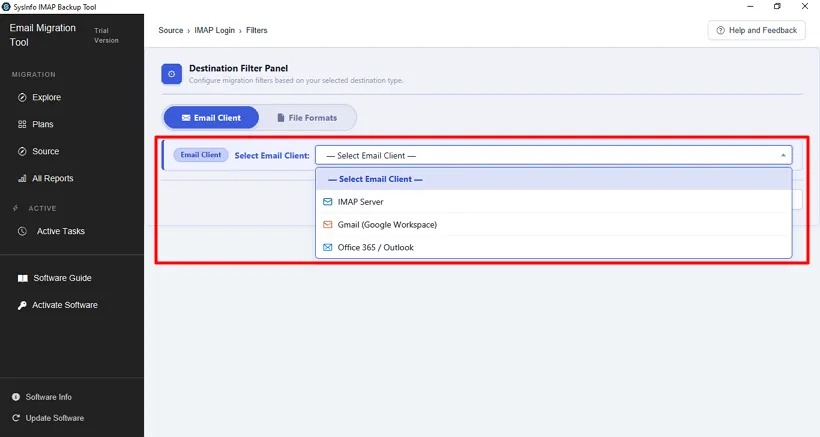
Under the Email Client section, select Office 365/Outlook as the destination email platform. Although the software supports other email clients, such as IMAP and Gmail (Google Workspace), this guide uses Office 365/Outlook for the migration process.
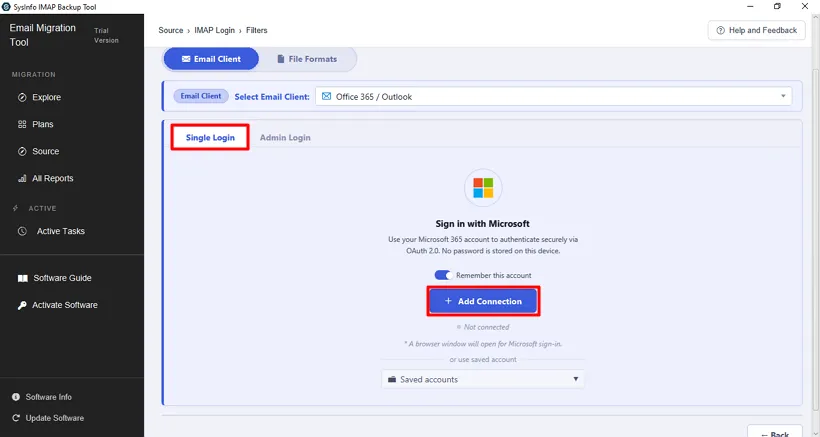
Select the Single Login option and click Add Connection to connect your Microsoft 365/Outlook account. Sign in securely using OAuth 2.0 authentication, which authorizes the account without storing your credentials. Once authentication is successful, the software establishes a secure connection for migrating the selected mailbox.
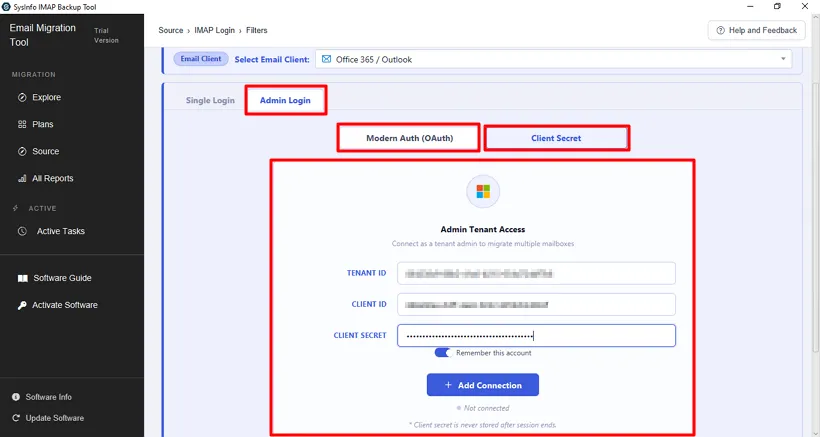
Select the Admin Login option to migrate multiple Microsoft 365 mailboxes. Choose either Modern Auth (OAuth) or Client Secret as the authentication method. Enter the required Tenant ID, Client ID, and Client Secret (for Client Secret authentication), then click Add Connection to establish a secure admin-level connection with your Microsoft 365 tenant. Once the connection is verified, proceed with the migration.
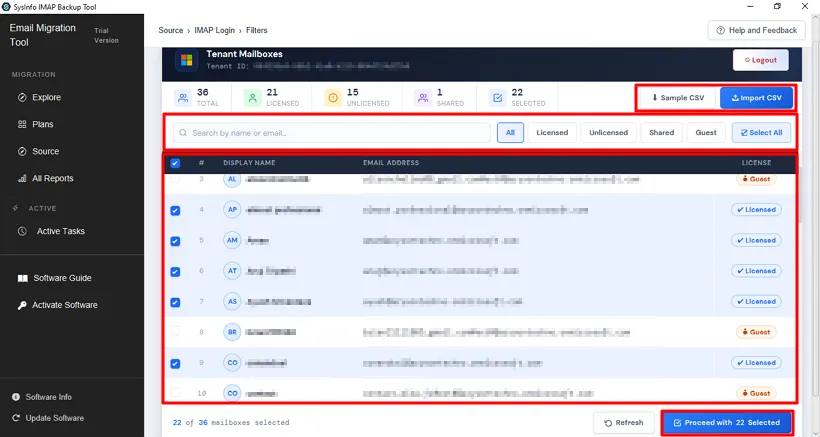
After successfully connecting to Microsoft 365, the software displays all available tenant mailboxes, including licensed, unlicensed, shared, and guest accounts. Use the Search option or apply filters to locate specific mailboxes. Select the required user mailboxes individually or in bulk, or import a CSV file for large-scale mailbox selection. Review your selections and click Proceed with Selected to continue the migration process.
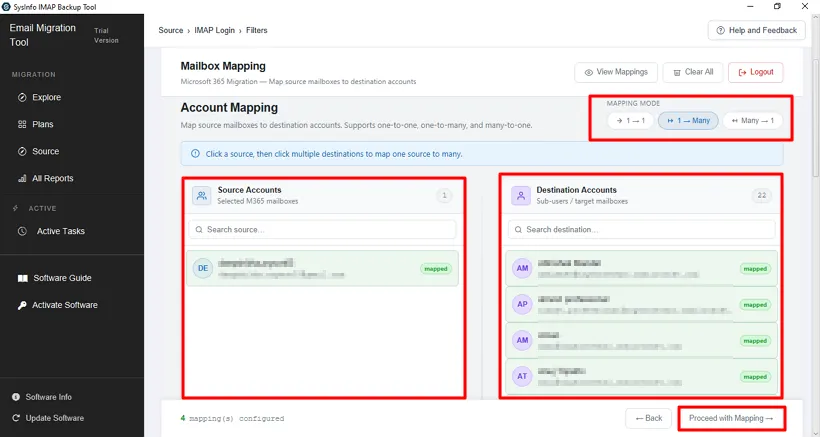
After selecting the mailboxes, configure the Mailbox Mapping according to your migration requirements. Choose a mapping mode such as 1-to-1, 1-to-Many, or Many-to-1. Map the selected Source Accounts to the appropriate Destination Accounts, verify that all mappings are correct, and then click Proceed with Mapping to continue the migration process.
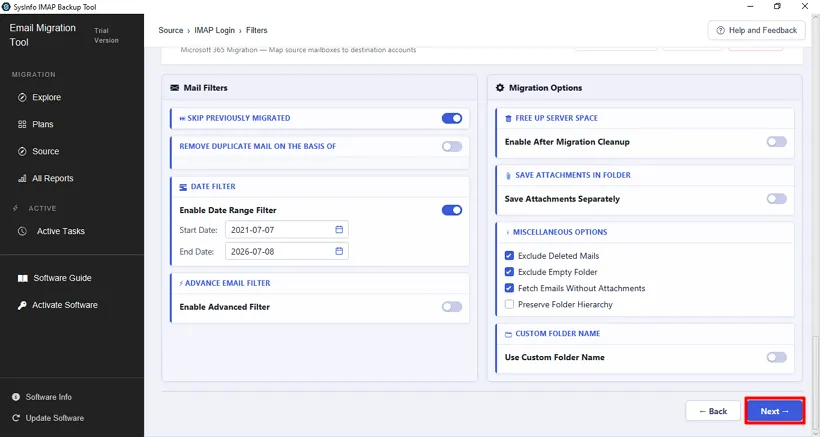
Before starting the migration, configure the required settings based on your preferences:
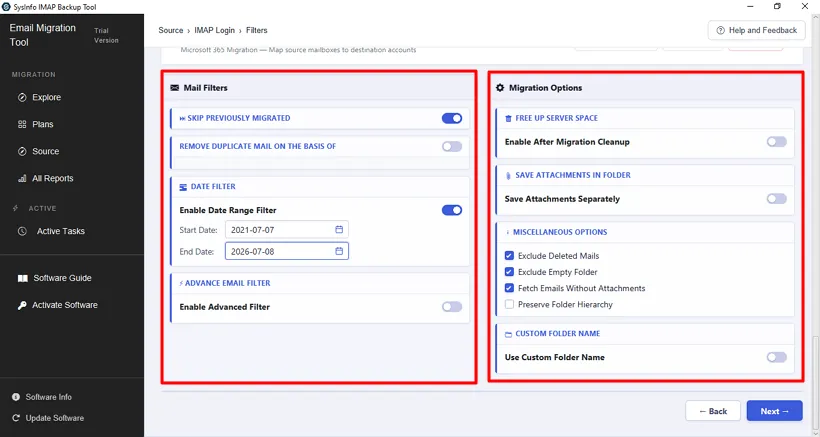
Review all the selected mailbox mappings and migration settings to ensure they are configured correctly. Once verified, click Next to initiate the IMAP to Microsoft 365/Outlook migration process.
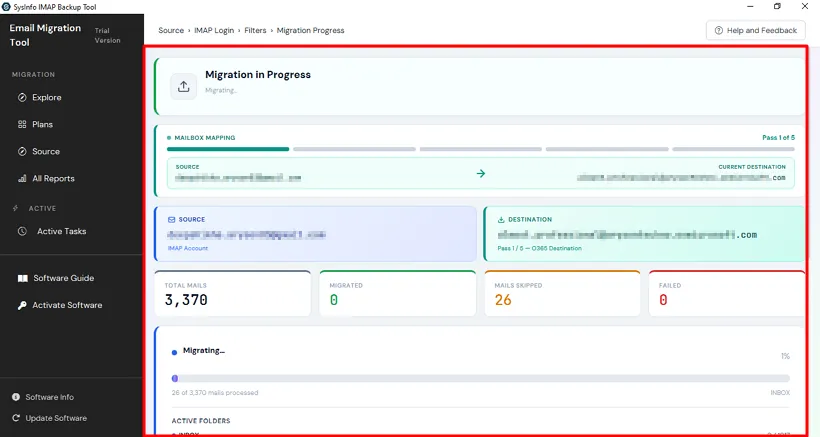
Monitor the progress of the IMAP to Microsoft 365/Outlook migration in real time. The software displays the migration status, processed items, and any errors encountered during the operation.
After the migration is completed, navigate to the All Reports section from the left navigation panel and select the IMAP Migration Report.
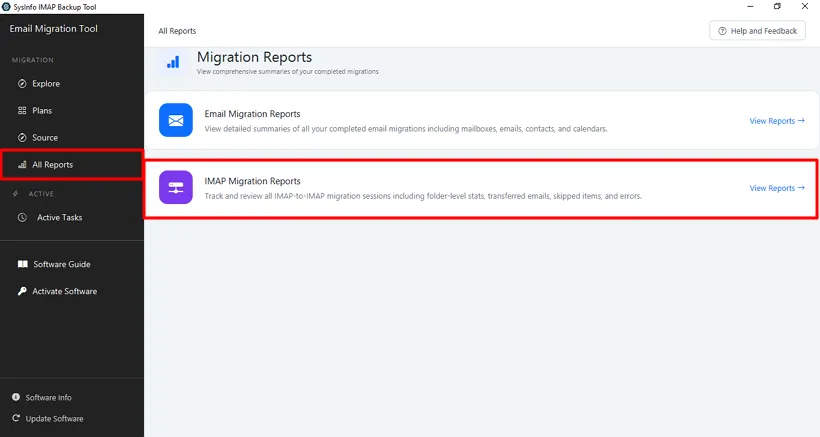
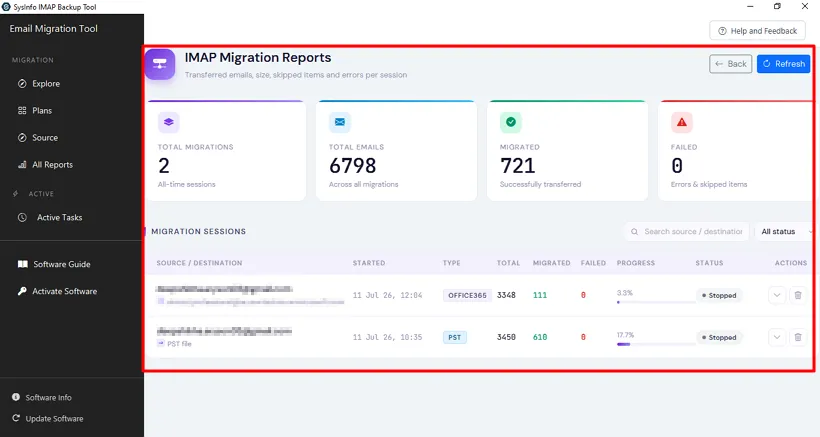
Open the IMAP Migration Report to review the complete migration summary. The report provides details such as the migration status, processed items, skipped items, failed items (if any), and other relevant information to help verify the successful completion of the migration.