Software Guide for SysInfo PST Viewer Tool
Follow this step-by-step guide to smartly view PST files in other formats.
Follow this step-by-step guide to smartly view PST files in other formats.
Download, install, and run the SysInfo PST Viewer on your Windows OS.

It displays the following:

Language Selection: Change the software interface language according to user preference for better accessibility and ease of use.


Download and install the SysInfo PST Viewer Tool on your system.

Click on Load Outlook PST to fetch your files from your Outlook account, or you can choose manually from your device.

Click on Browse and navigate to the .pst files saved on your system.

Allows users to preview complete emails, attachments, tasks, notes, headers, MIME content, and raw HTML data before saving or repairing the PST file.

To view the complete emails, click on the Open in Browser option in the bottom right corner.

Click on the Save Repaired File to move further in the process.

Various options are available to save your PST files, such as PST, EML, MSG, PDF, MBOX, and CSV.

Convert and save Outlook emails directly into a PDF document format while maintaining original email formatting, metadata, and attachments. It is ideal for document sharing, printing, and legal record management.
| Single PDF Option: | Merged PDF Option: |
|---|---|
| The Single PDF option saves each individual email as a separate PDF file. It helps users organize emails individually and access each message independently without merging them into one document. | This option combines multiple emails into a single PDF document for easier storage and management. The software automatically splits the PDF file when its size exceeds the supported limit to maintain performance and accessibility. |

The Duplicate Handling feature helps users manage duplicate emails and contacts during the saving process. It prevents redundant data storage and ensures a cleaner and more organized export result.

This section provides multiple options for managing email attachments during the export process. Users can keep, extract, convert, or exclude attachments according to their specific requirements.

The Custom Folder option allows users to define a personalized folder name and storage location for saving exported mailbox data. It improves file organization and simplifies output management.

Allows users to export emails from a specific time period for accurate and selective mailbox saving.

This feature helps users continue interrupted export processes without restarting from the beginning. It automatically skips already exported files and resumes the remaining mailbox export operation efficiently.

The Browse option enables users to navigate local drives and choose a specific destination folder for saving exported files securely.

The Save button starts the mailbox export or saving process using the selected filters, formats, and destination settings.

Displays a confirmation message after the PST file is successfully exported or converted.

Download and install the SysInfo PST Viewer Tool on your system.

Click on Load Outlook PST to fetch your files from your Outlook account, or you can choose manually from your device.

Click on Browse and navigate to the .pst files saved on your system

Allows users to preview complete emails, attachments, tasks, notes, headers, MIME content, and raw HTML data before saving or repairing the PST file.

To view the complete emails, click on the Open in Browser option in the bottom right corner.

Click on the Save Repaired File to move further in the process.

Various options are available to save your PST files, such as PST, EML, MSG, PDF, MBOX, and CSV.

Convert and save Outlook emails directly into a MBOX format while maintaining original email formatting, metadata, and attachments.

The Duplicate Handling feature helps users manage duplicate emails and contacts during the saving process. It prevents redundant data storage and ensures a cleaner and more organized export result.

This section provides multiple options for managing email attachments during the export process. Users can keep, extract, convert, or exclude attachments according to their specific requirements.

The Custom Folder option allows users to define a personalized folder name and storage location for saving exported mailbox data. It improves file organization and simplifies output management.

Allows users to export emails from a specific time period for accurate and selective mailbox saving.

This feature allows users to divide large PST files into smaller parts for easier storage, sharing, and Outlook management.

The Text Filter section helps users refine and export only specific email data based on selected conditions. It allows users to filter mailbox items using sender, recipient, or subject-related keywords before starting the export process.
These advanced filtering options help reduce unnecessary data export, save processing time, and improve mailbox management efficiency.

This feature helps users continue interrupted export processes without restarting from the beginning. It automatically skips already exported files and resumes the remaining mailbox export operation efficiently.

The Browse option enables users to navigate local drives and choose a specific destination folder for saving exported files securely.

The Save button starts the mailbox export or saving process using the selected filters, formats, and destination settings.

Displays a confirmation message after the MBOX file is successfully exported or converted.

Download and install the SysInfo PST Viewer Tool on your system.
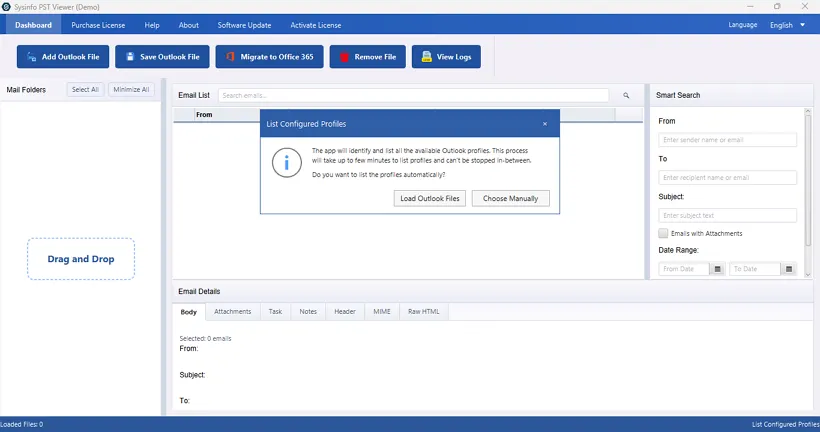
Click on Load Outlook PST to fetch your files from your Outlook account, or you can choose manually from your device.
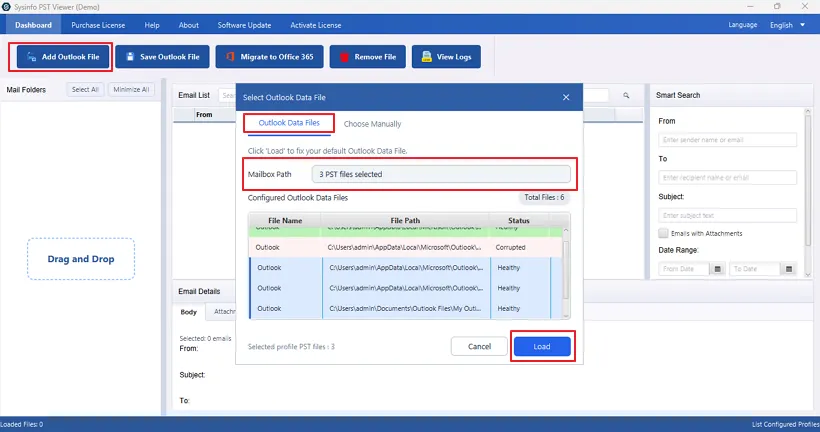
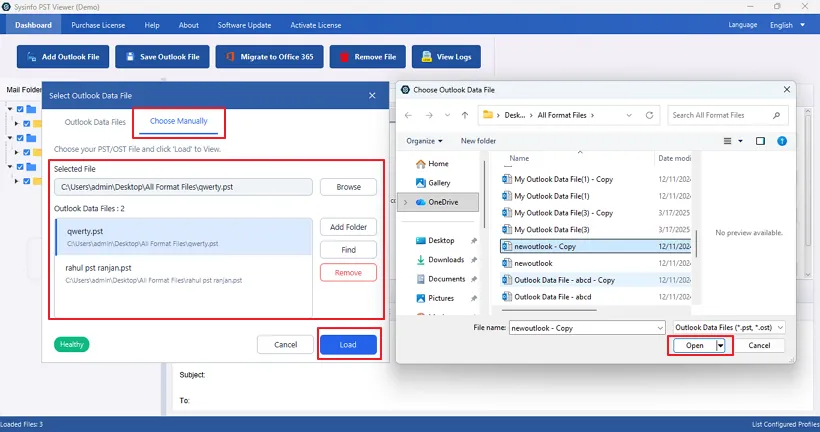
Click on Browse and navigate to the .pst files saved on your system. Select them, click Open, and then Load to access them in the tool.
Allows users to preview complete emails, attachments, tasks, notes, headers, MIME content, and raw HTML data before saving or repairing the PST file.
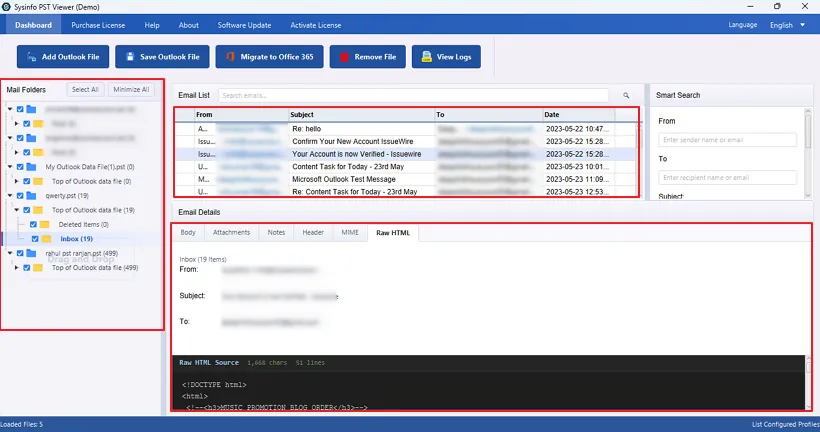
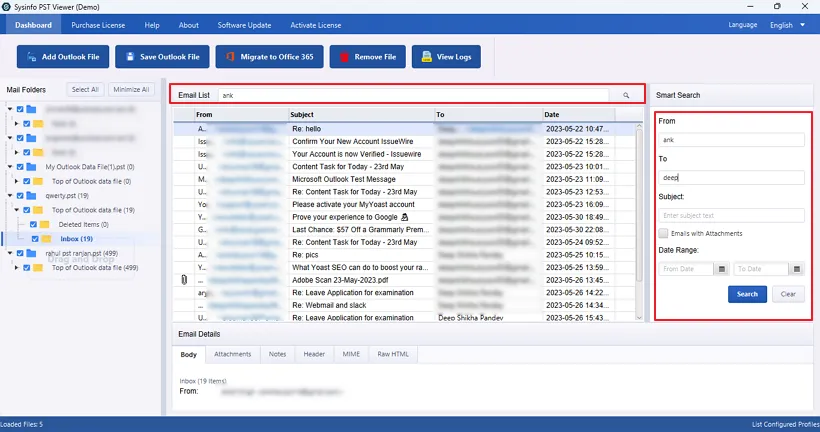
Use any keyword in the Email List search bar or apply Smart Search with filters based on From, To, Subject, Has Attachments, and Date Range. This allows for selective email search as desired from multiple emails altogether.
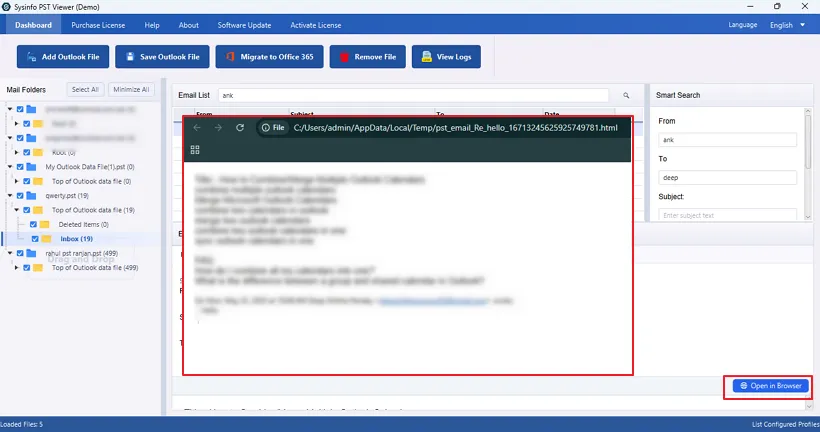
To view the complete emails on the web, click on the Open in Browser option in the bottom right corner of the Body tab.
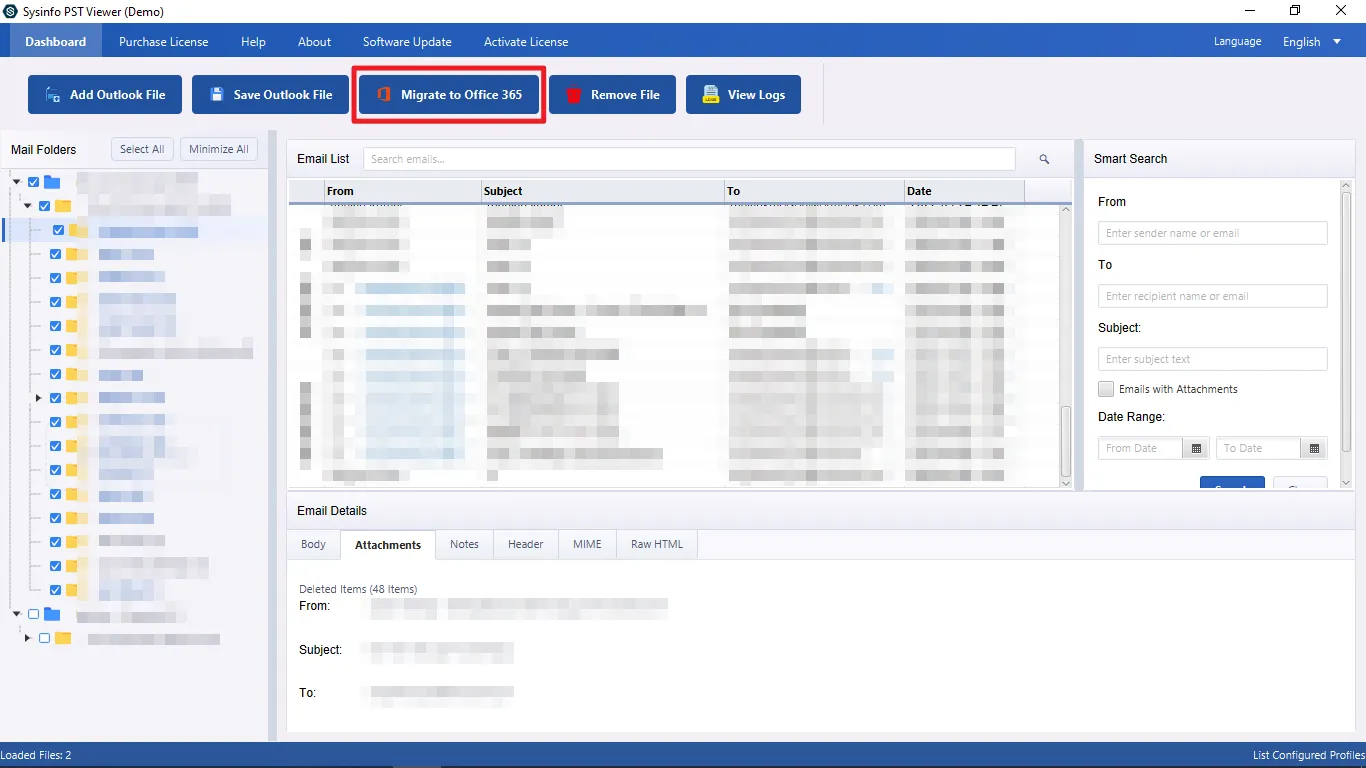
Click on “Migrate to Office 365” from the above panel to proceed with the migration process.
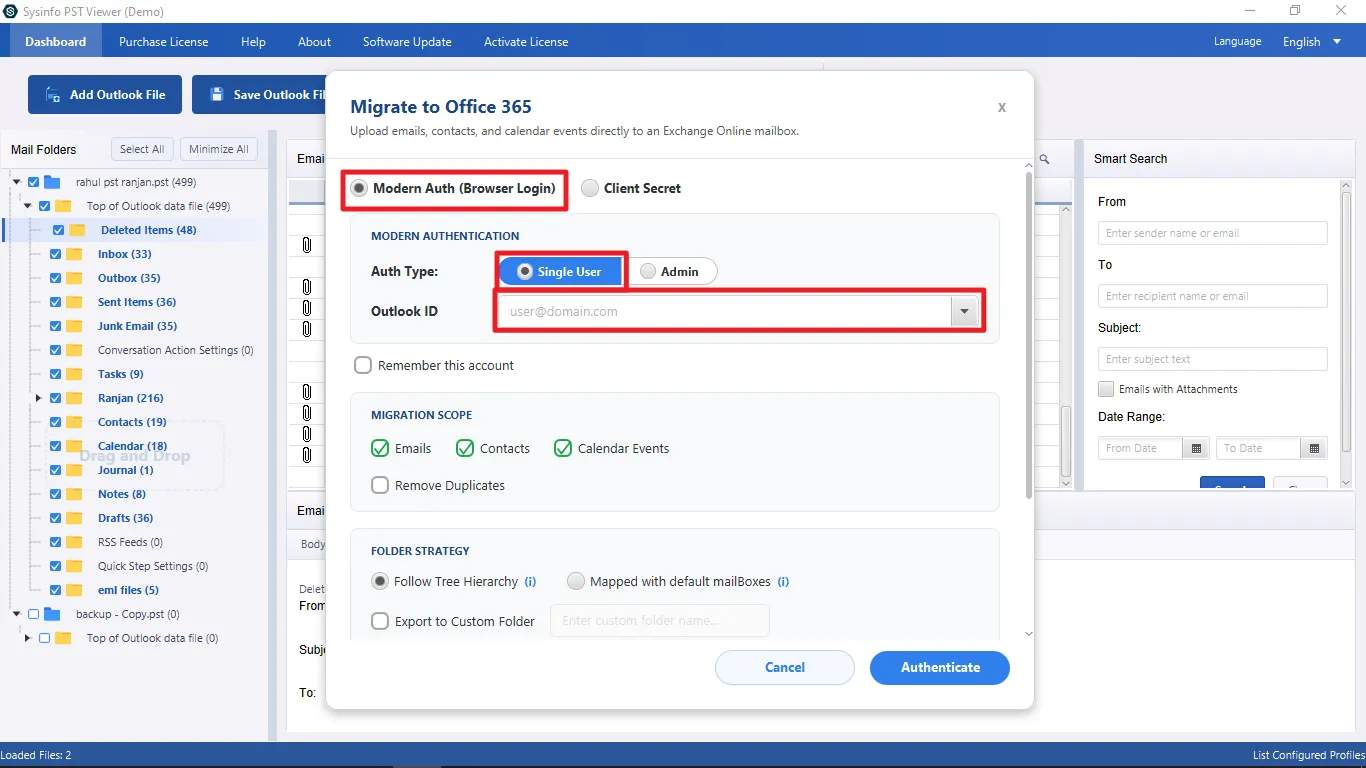
(Type 1): Log in using Modern Auth (Browser Login) for Single User.
Log in to your Microsoft account using Modern Auth (Browser Login) for Single User. Enter your Outlook email address for a secure login via browser by entering your email address, password, and MFA (if enabled). Ensure your account is already logged in on the web for quick access.
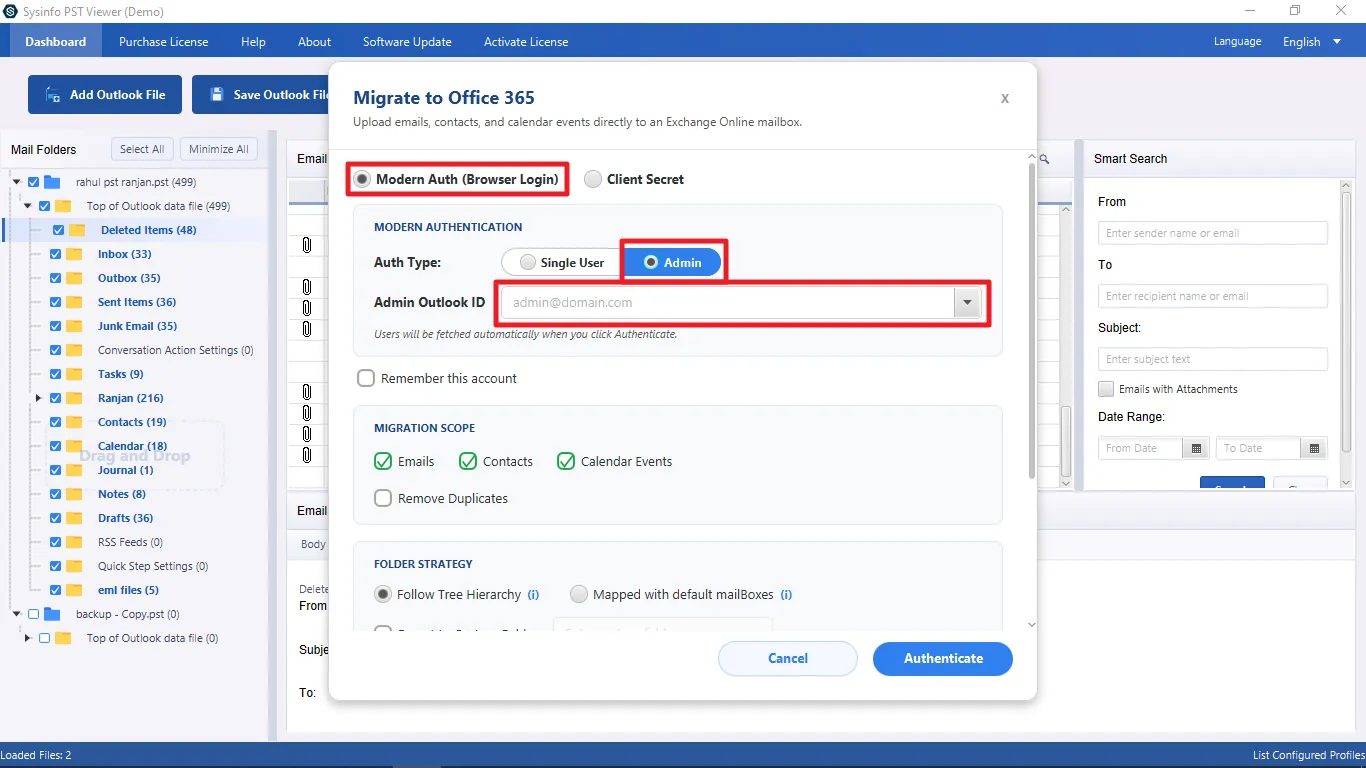
(Type 2): Login using Modern Auth (Browser Login) for Admin.
Here, login to your Microsoft account using Modern Auth (Browser Login) for Admin. Enter your Microsoft 365 Exchange Admin Center ID and sign in with proper credentials via OAuth 2.0 authentication over the Graph API.
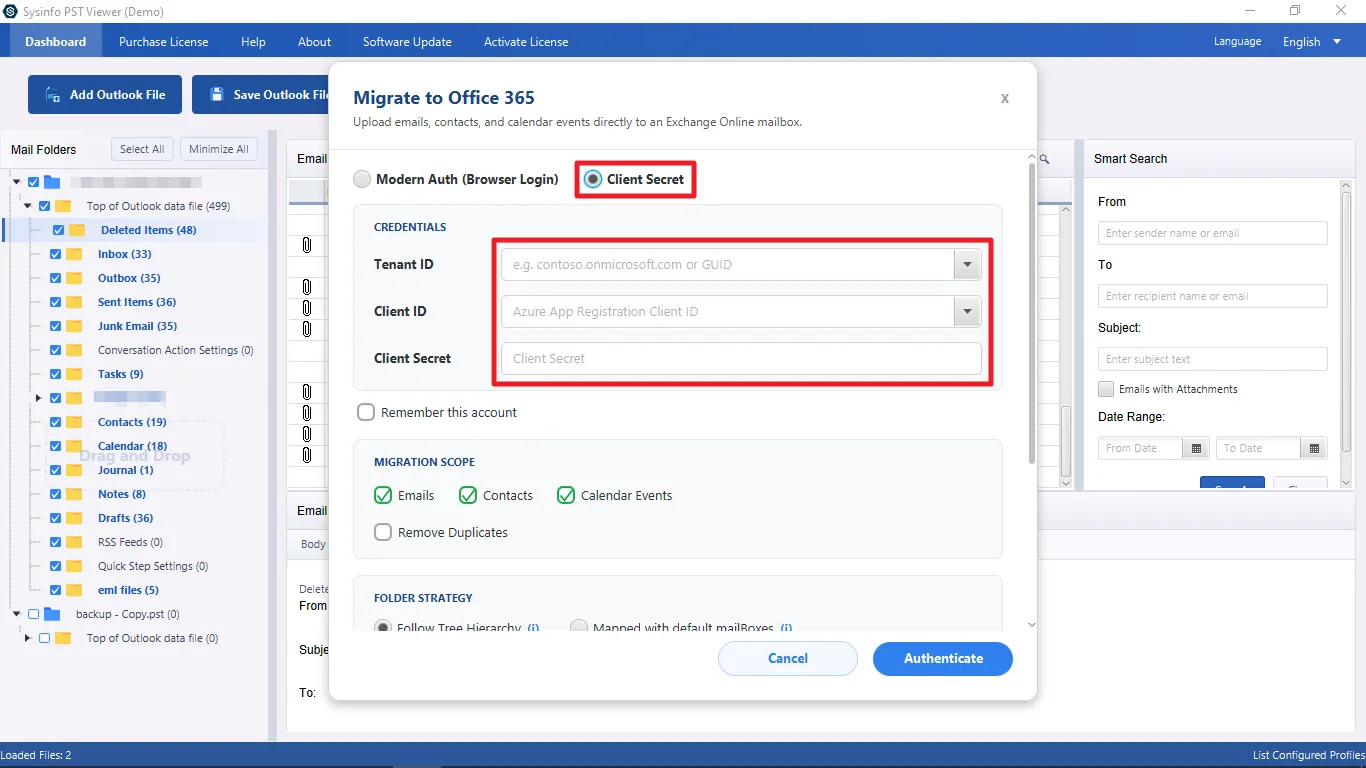
(Type 3): Login using Client Secret.
It is the Admin Impersonation login to your Microsoft account using the Client Secret, Client ID, and Tenant ID. You can simply add all three credentials created with a proper admin license from Microsoft for proceeding.
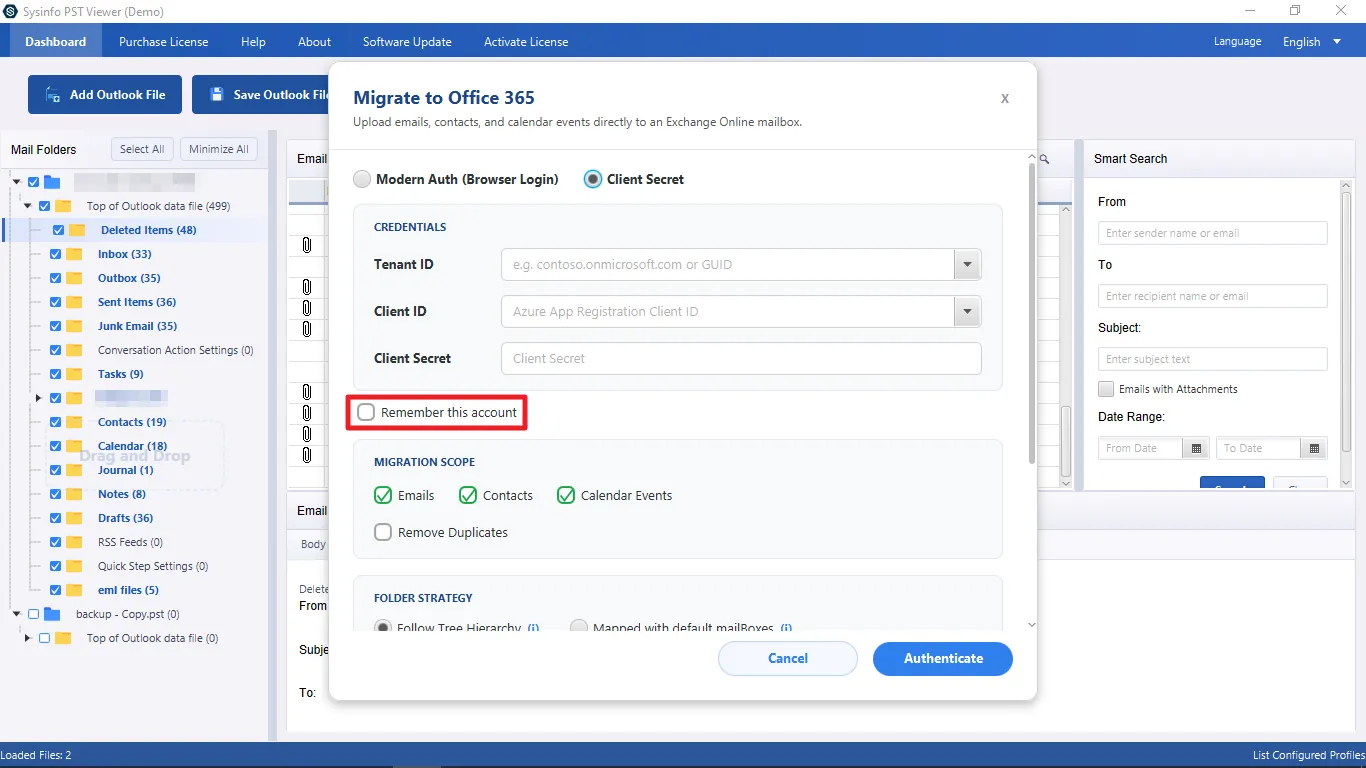
You can store your Login credentials for later use with the Remember this Account feature. It is useful to skip re-login everytime you open PST viewer to migrate your PSTs directly within the Office 365 account.
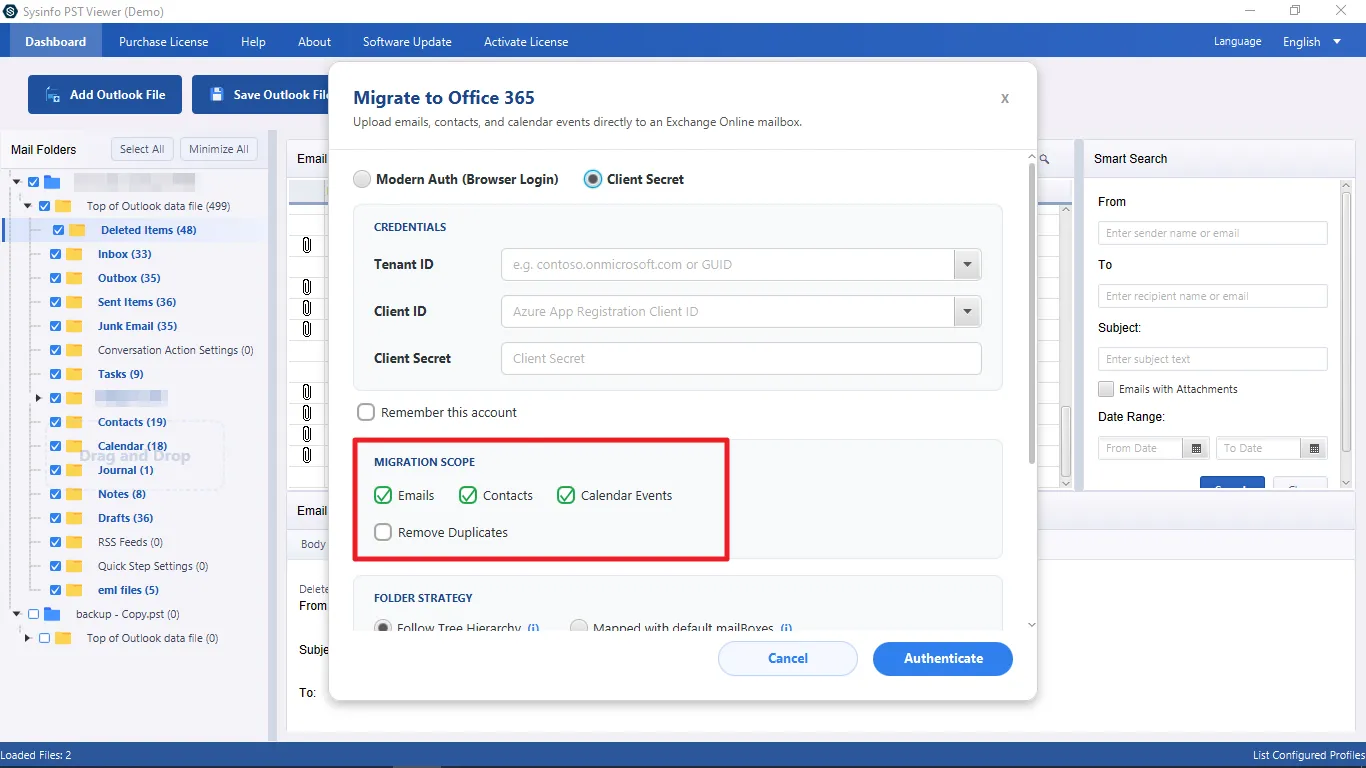
You can choose multiple options for what you actually want and what is best for your requirements (Emails/Contacts/Calendar Events). Also, with the Remove Duplicate feature, you can identify and skip similar emails and other items based on To, From, Subject, CC, and BCC.
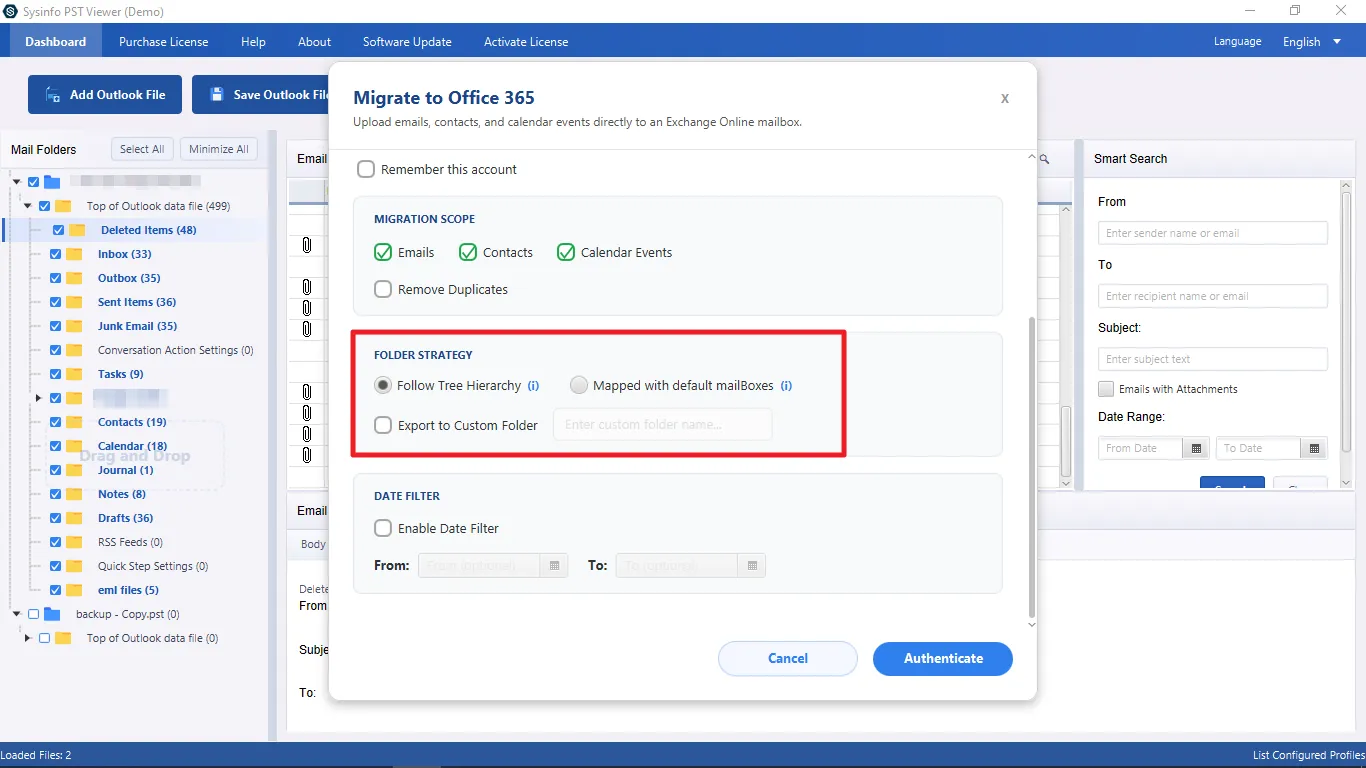
You can edit the folder's name using the Export to Custom Folder option for easy access and identification within Office 365 after the migration. Moreover, use the Follow Tree Hierarchy to keep the original folder structure within the PST file intact, or choose Mapped with default mailboxes to identify and set yourself in which mailbox and which PST folder you want to save, like Inbox, Drafts, Sent Items, etc.
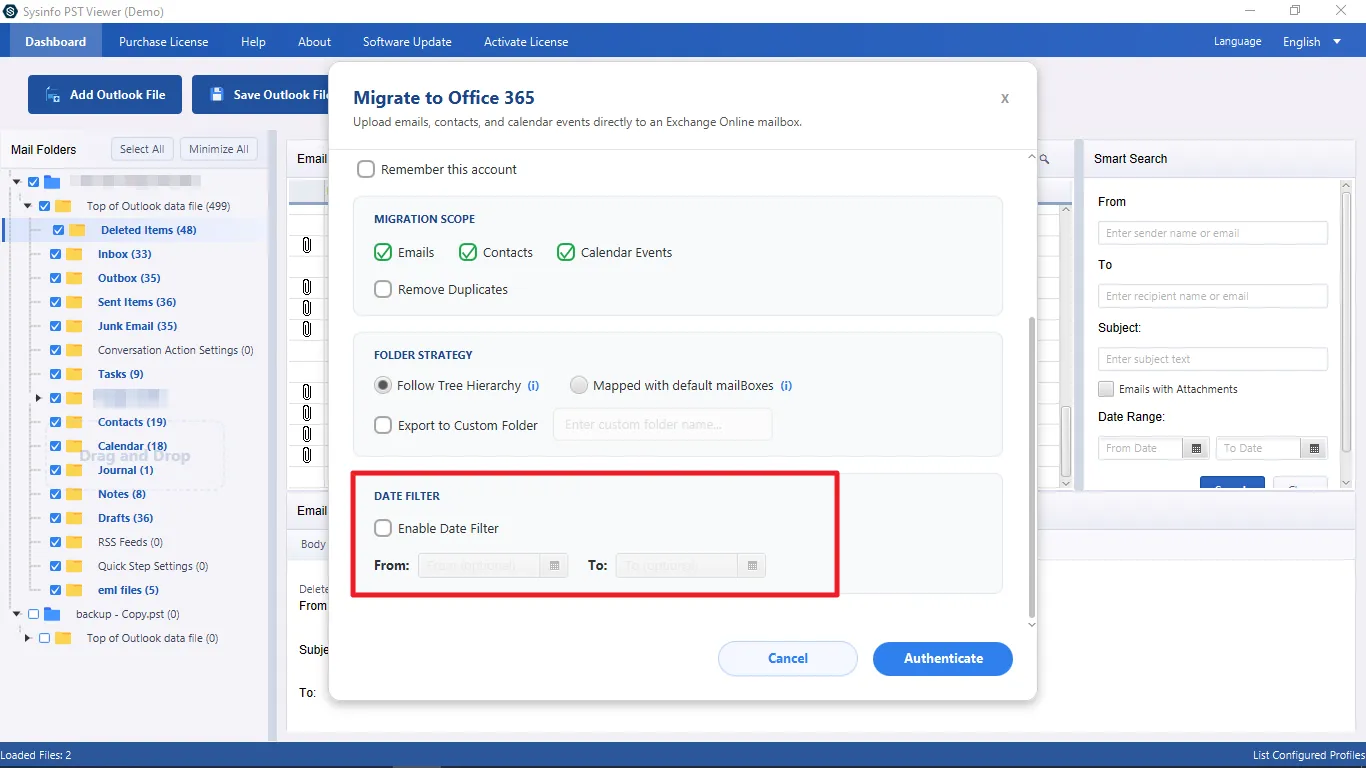
This is the customization option, which provides you Date Filter for the required data only. It helps in selective migrations from a particular timeline.
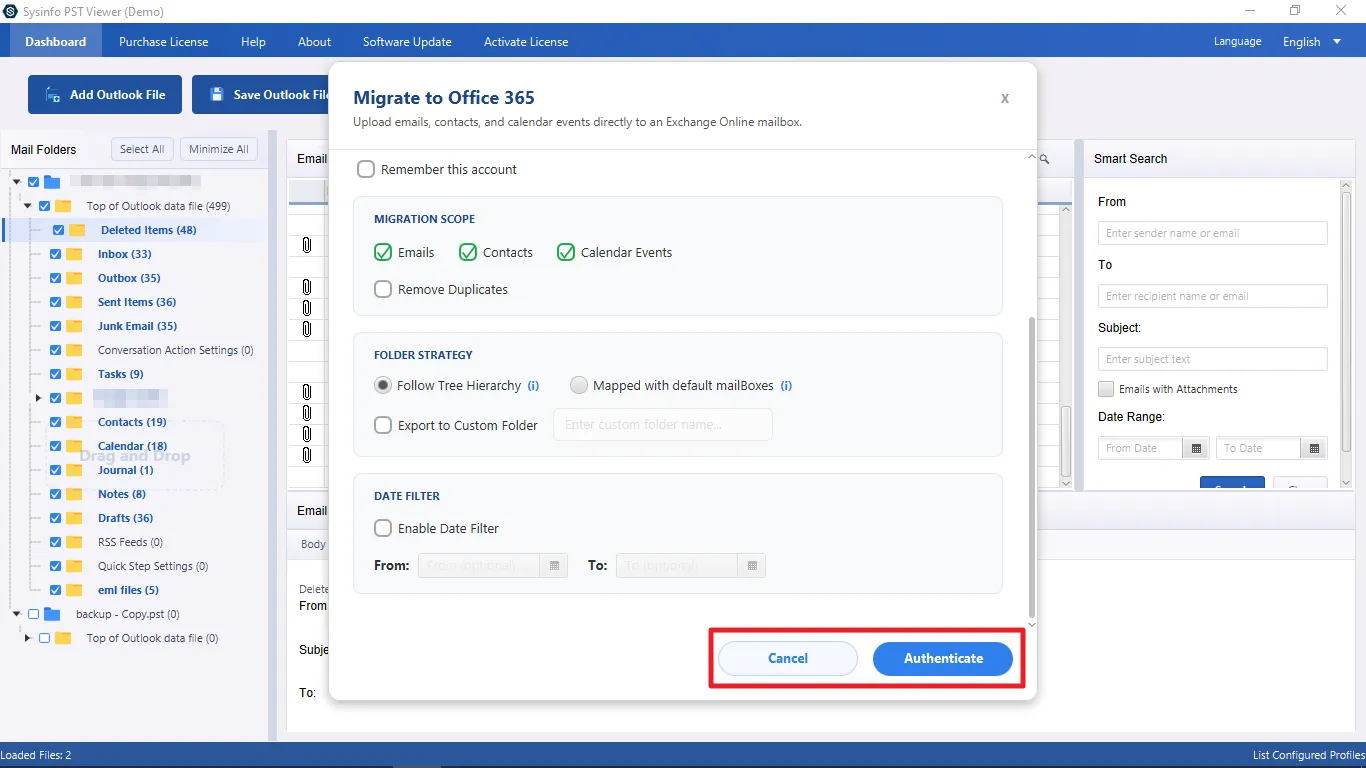
Click on "Authenticate" to continue; that will redirect to the browser, or "Cancel" to Exit.
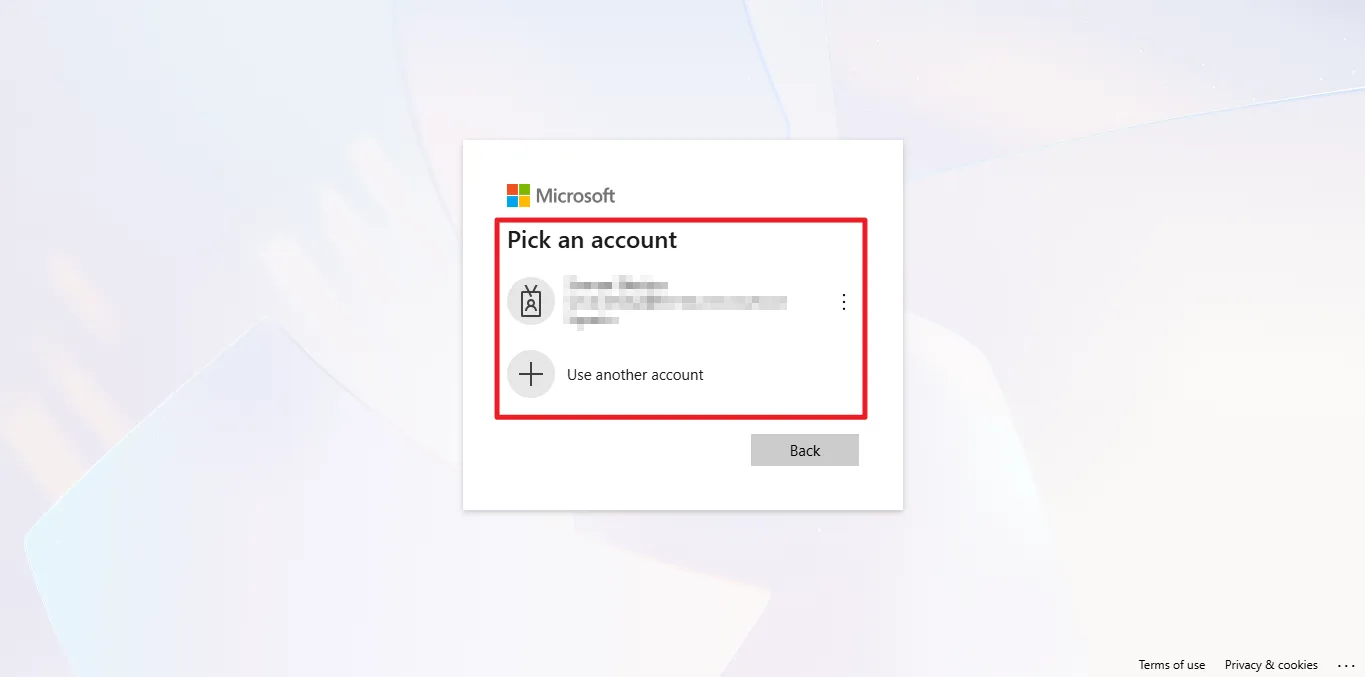
If you are logging in for the first time, enter your email and continue; otherwise, choose an account from the page as shown in the figure.
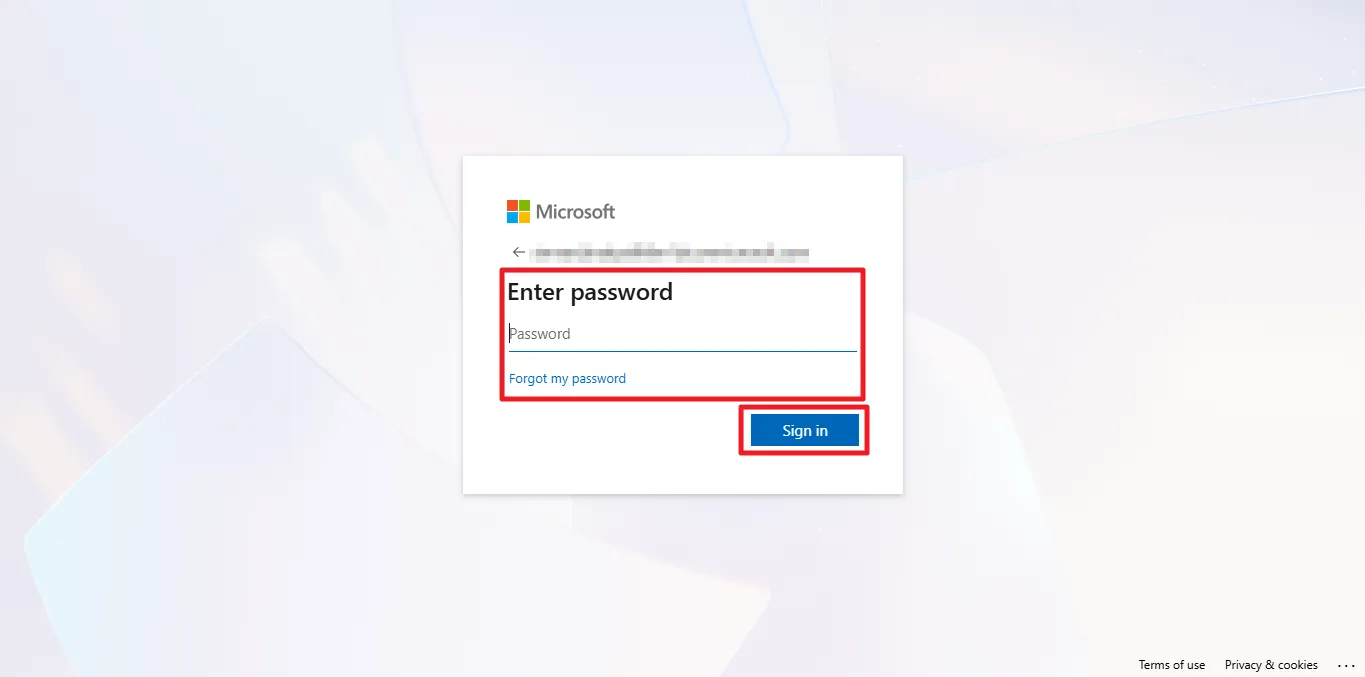
Enter the password to complete the process of authenticating your target M365 account.
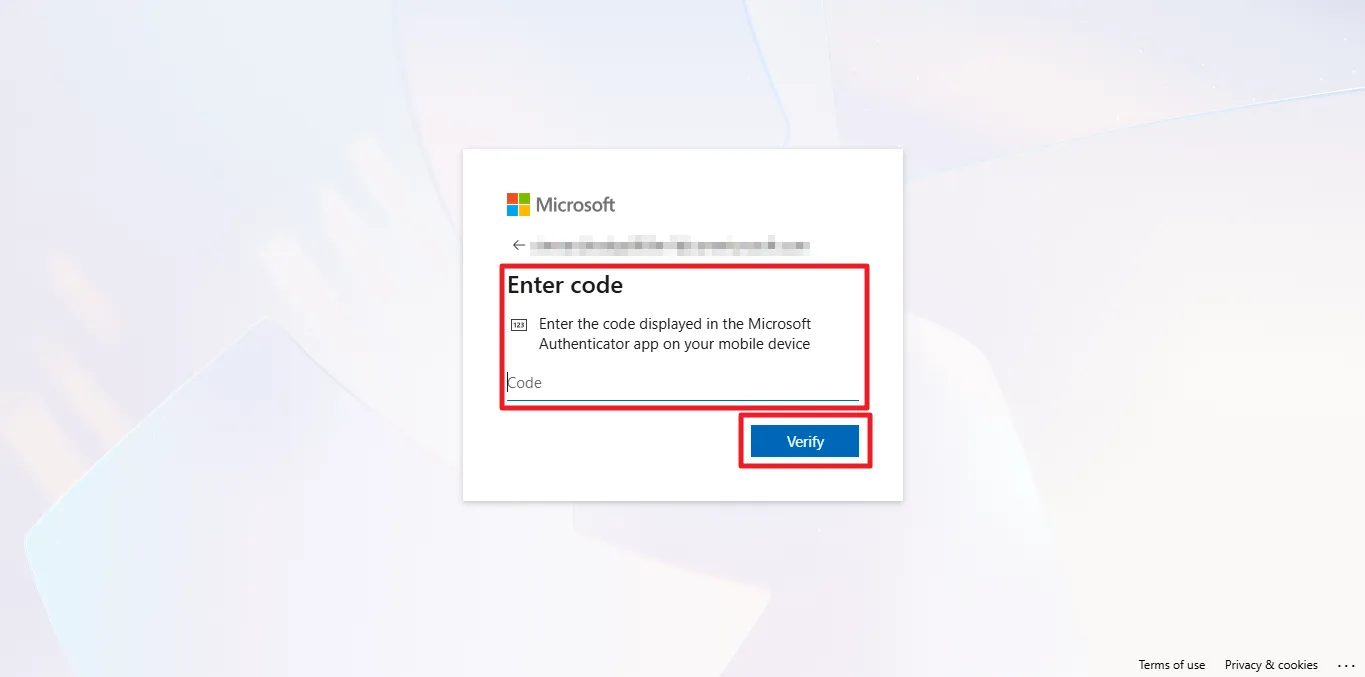
If you set up two-step verification on your account, then verify that & complete the process.
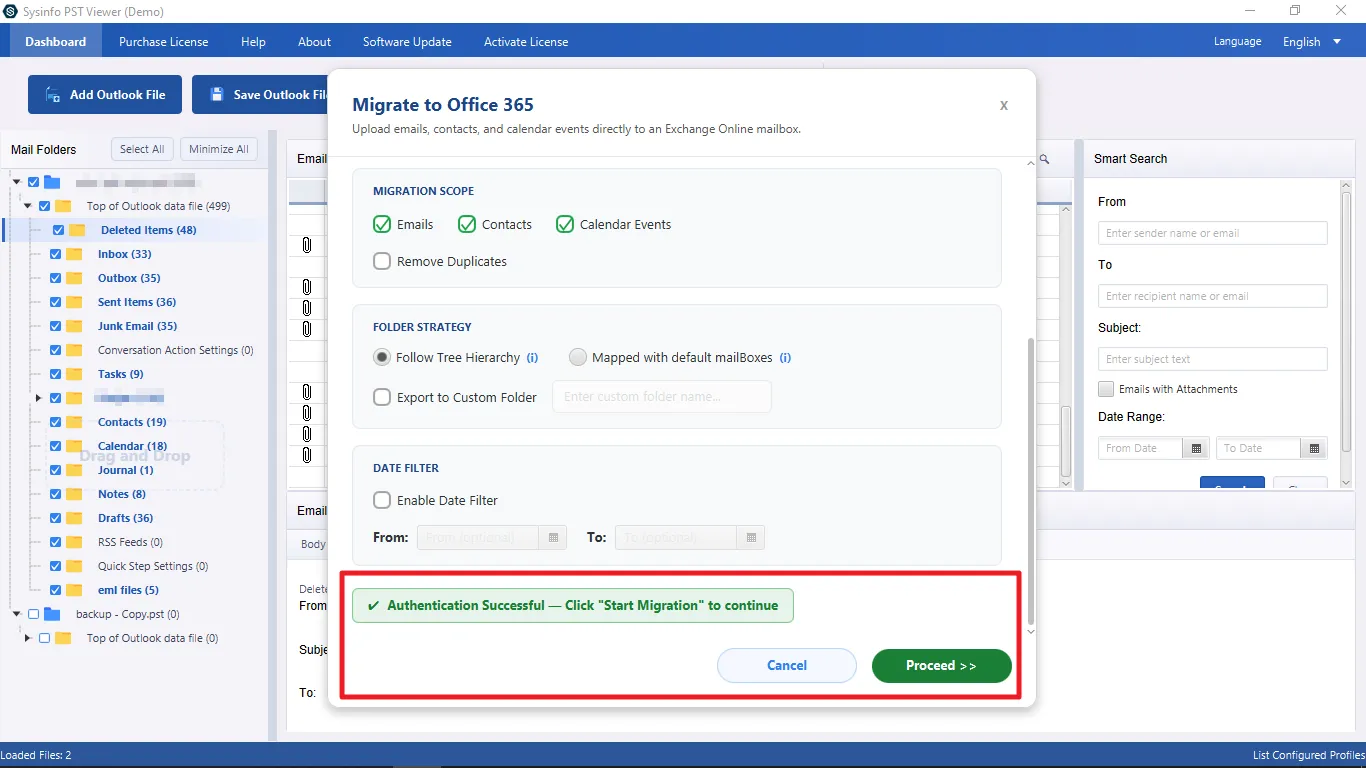
After a successful login, you will see this page for further processing. Click on "Proceed" to continue.
In the next menu, you can choose the files that you want to go for further processing. Click Confirm Selection to move ahead.
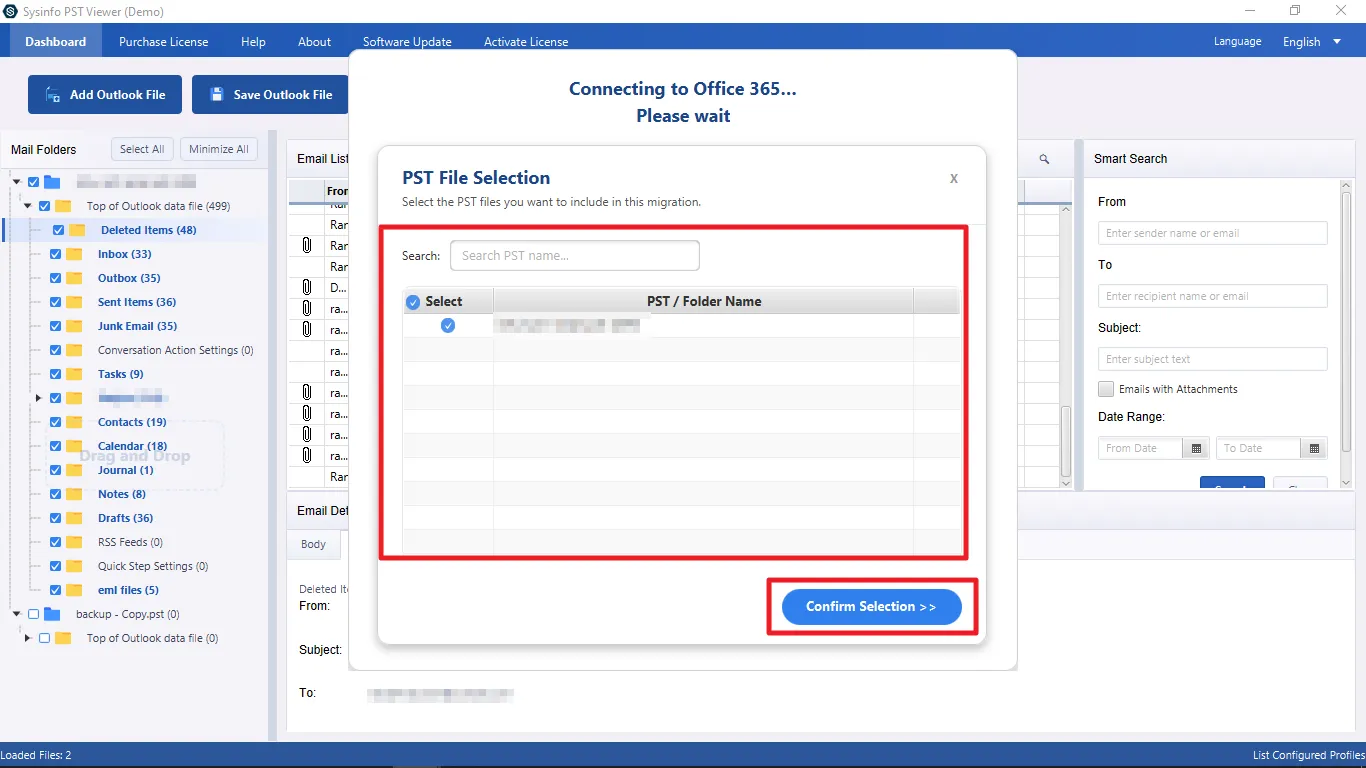
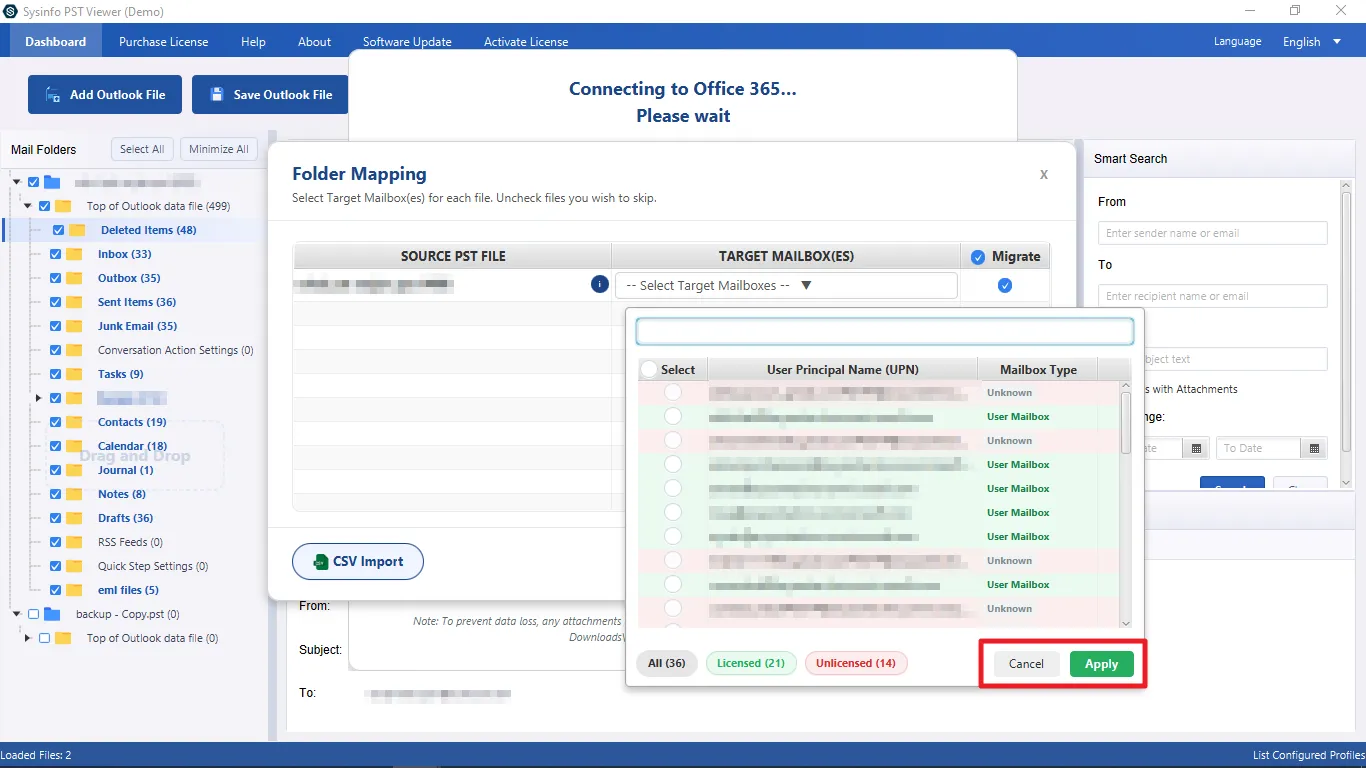
Now, select the user account for migration for your specific source PST files. Choose them from the list of all mailboxes. Tap Apply.
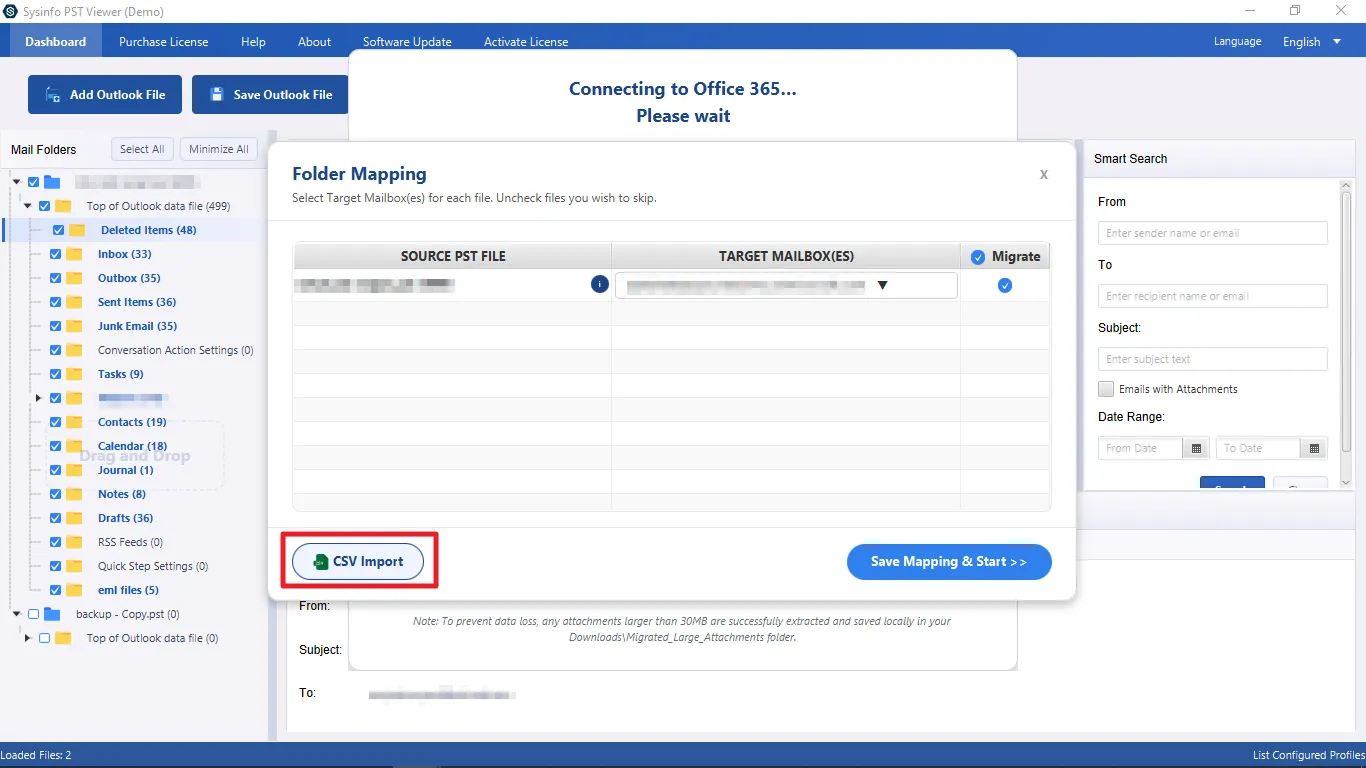
You can also select the destination of your M365 account users using CSV Import. Select your file from the system and upload it to configure and set target mailboxes from the CSV uploaded.
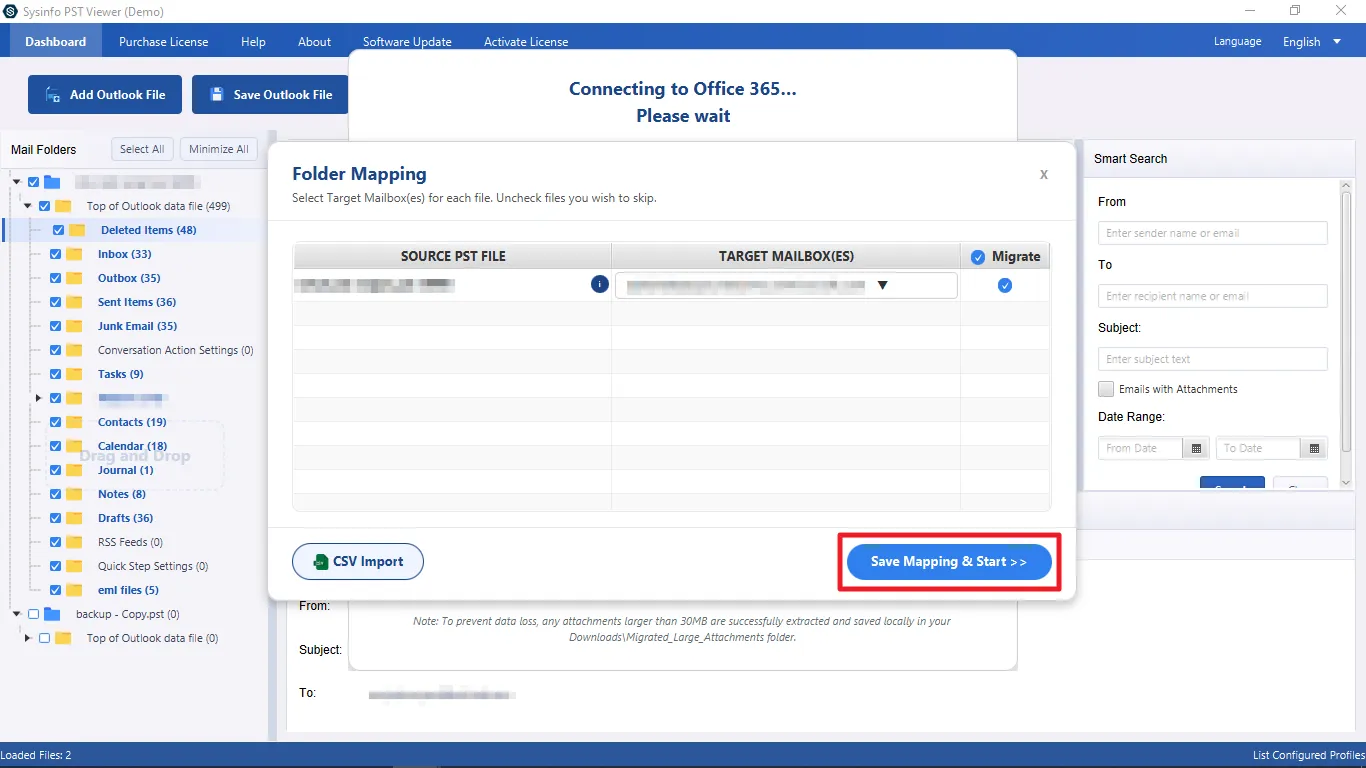
Once the source PST and the target mailboxes are mapped as you need to save the data, click on Save Mapping and Start
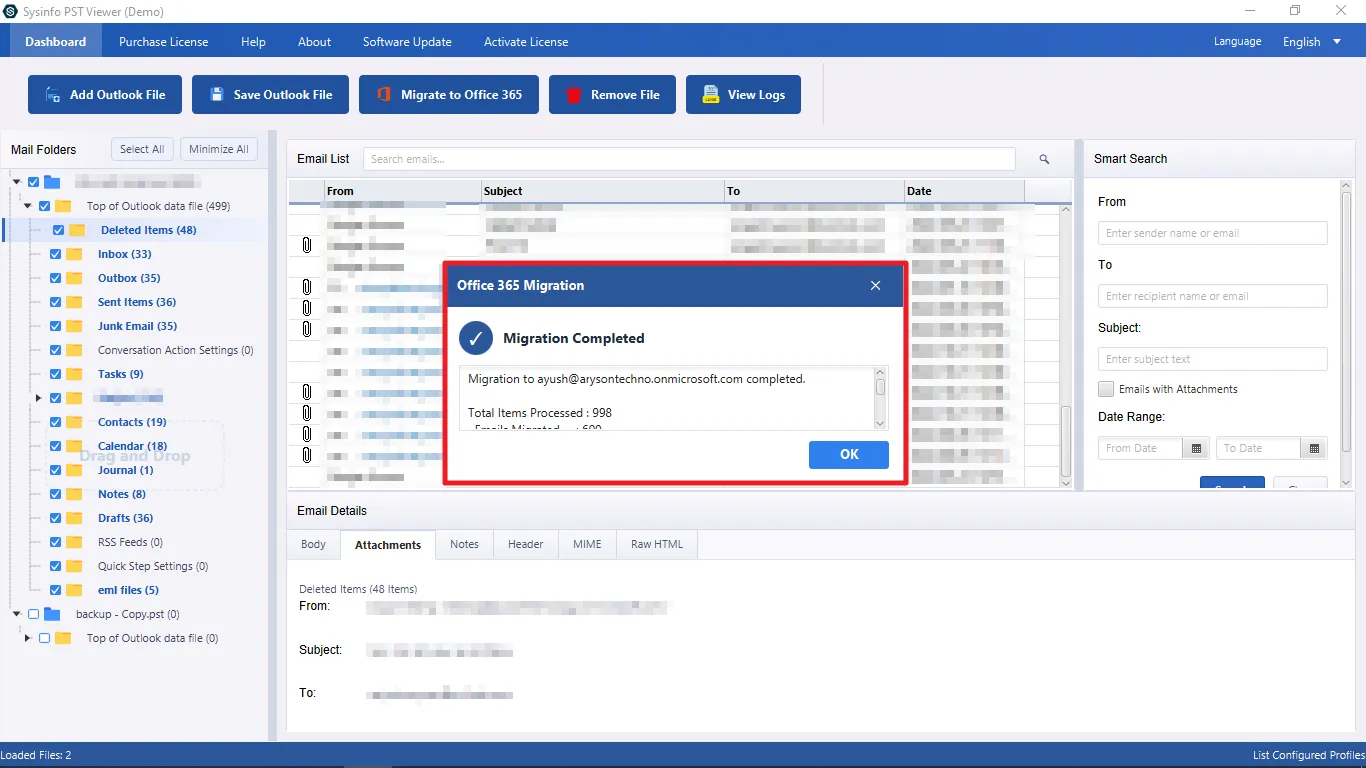
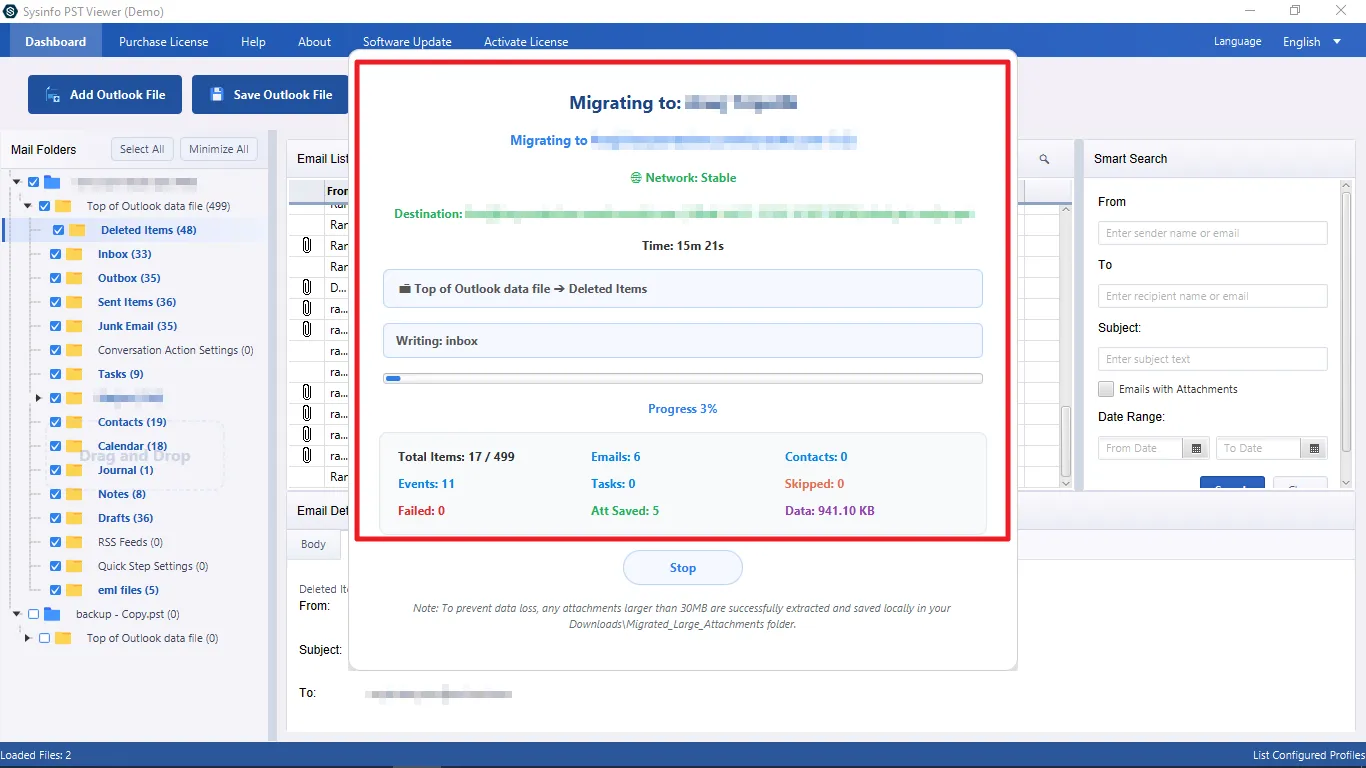
The next window displays the processing dashboard in real-time. You can also check the total files migrated, items, tasks, skipped, failed, and others.
This is the final window where you see the result. Congratulations! Your migration is completed. Click OK to close. Use View Logs to check the status of entire migration after the download.